
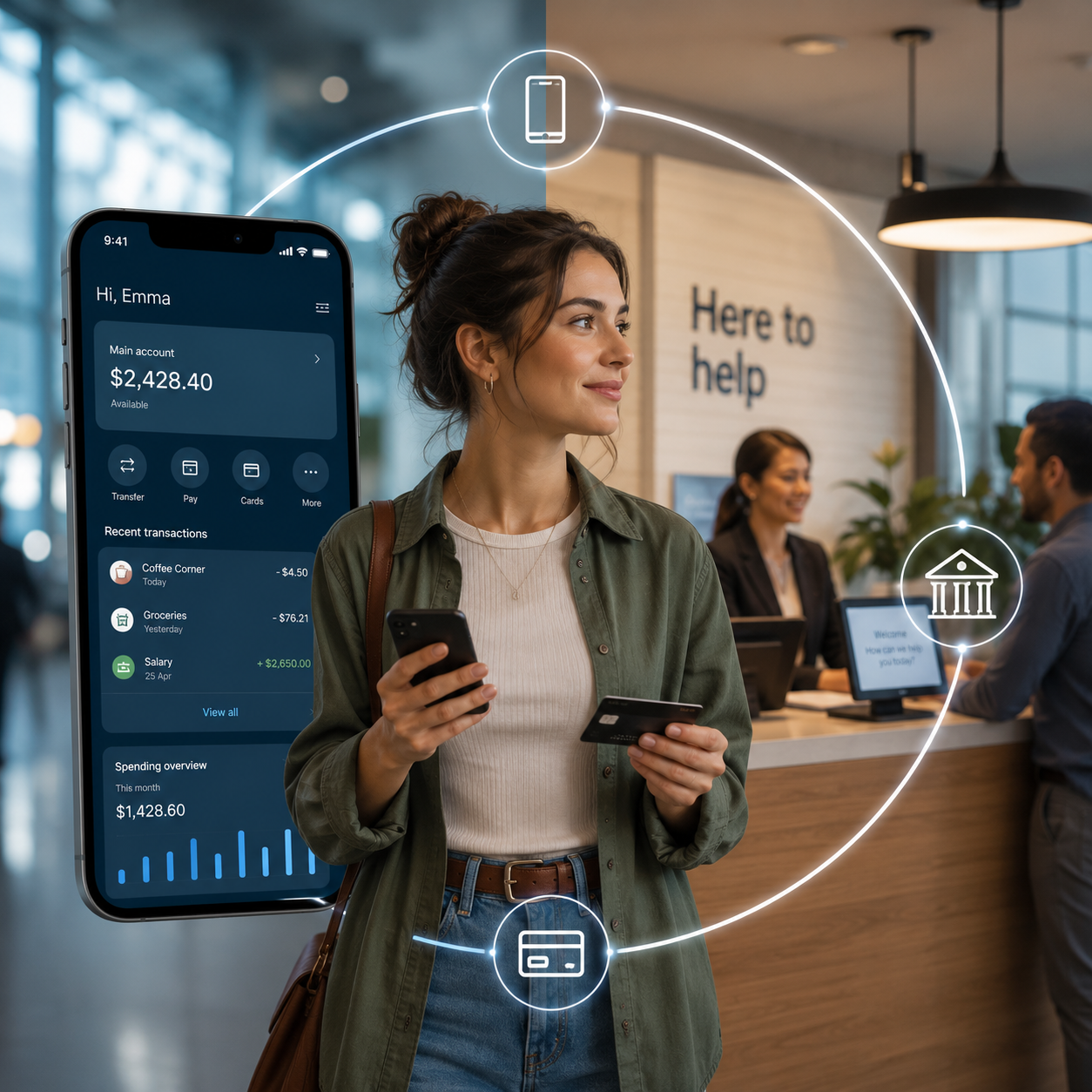

Modern customer experience in the banking industry
Picture this. You’re travelling. Your card stops working — lost, blocked, or simply swallowed by a foreign ATM. In the old world, you call a number, wait on hold, and spend the next three days improvising with cash. In a purely digital world, you log into an app and wait for a replacement to be mailed to your home address while you’re still abroad. Neither of these feels like a good bank.
Now imagine a third option: you verify your identity on your phone, walk to a nearby kiosk in the airport terminal, and collect a fully activated replacement card within minutes. The digital and physical working together, exactly when and where you need them.
That is the promise behind what the industry is calling “phygital banking” — and according to a recent piece in FinTech Magazine, it is quietly becoming the defining battleground for customer experience in the banking industry.
The False Choice Banks Have Been Offering
For the past decade, the dominant story in banking has been digital transformation. Branches closing, apps improving, everything moving online. The implicit message to customers was: the future is digital, and if you’re not there yet, you’ll catch up.
But something got lost in that narrative. The branch wasn’t just a place to deposit a cheque. It was, for many customers, the place where complex, anxious, or significant financial moments happened in the company of another human being. A mortgage application. A bereavement. A first business account. Moments that felt too important for a chatbot.
Customers didn’t want full digital instead of physical. They wanted digital where it made sense, and humans where it mattered. They expect continuity — the ability to switch channels without repeating themselves. Banks that misread that distinction have been paying for it in trust and loyalty ever since.
The Physical Object as a Trust Signal
Here is something easy to overlook in the rush toward app-first banking: the physical card in your wallet is doing something the app cannot. It’s tangible. It has weight. When you pull it out to pay, you feel it.
In a market where digital experiences can feel interchangeable, physical elements like cards offer banks an opportunity to create a lasting, recognizable identity. For many customers of digital-first banks — neobanks, challenger banks — that card is the only physical connection they have with the brand at all. It carries more brand weight than any notification or dashboard screen. The tactile weight of a physical card acts as a subconscious marker of reliability in an ephemeral digital world, turning a routine transaction into a sensory brand experience.
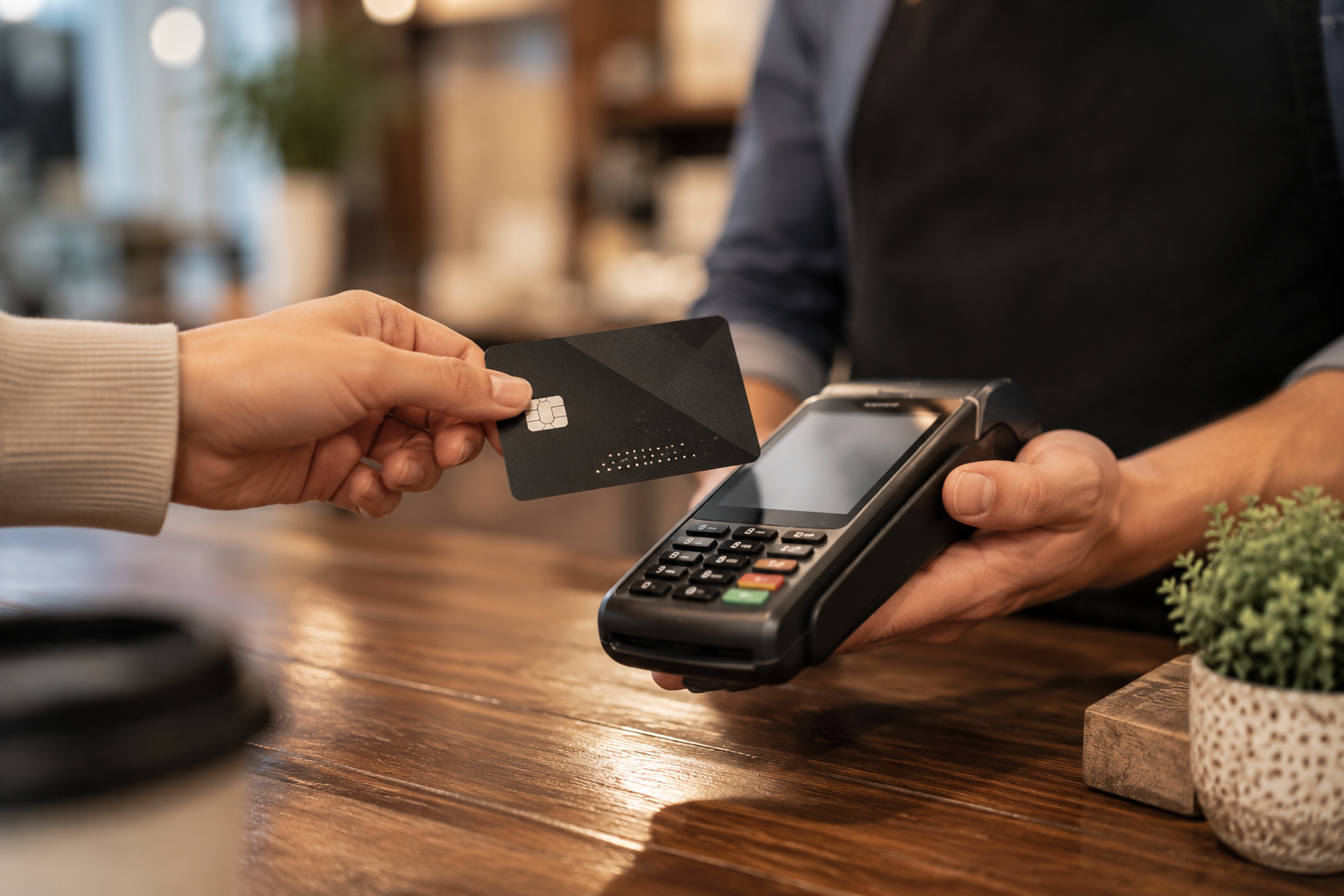
Think about what that means for trust. Banking is, at its core, a trust relationship. And trust is built through consistency across every touchpoint — including, perhaps especially, the ones you hold in your hand.
Access Has Changed. It Hasn’t Disappeared.
Branch closures are real, and for many customers — particularly older customers, rural customers, or those without reliable internet — they represent a genuine loss. This is a legitimate concern that the industry has not always handled well.
But branch closures do not mean the end of physical banking. They highlight the evolution of its delivery.
Some banks are piloting instant‑issuance kiosks in high‑traffic locations such as airports. Self-service kiosks are not simply ATMs, but sophisticated hubs that extend a bank’s reach into high-footfall areas like airports and transit hubs, offering a different form of access rather than acting as a simple replacement for the branch.
The strongest banks are shifting away from expensive fixed-location infrastructure toward a more distributed physical presence — one designed around where customers actually are, rather than where banks have historically planted flags.
The question every bank should be asking is not “how many branches do we have?” but “when a customer needs us in the physical world, can we be there?”
What Customers Actually Want
The answer, consistently, is not either-or. It’s both — intelligently sequenced.
They want the app for the everyday: balance checks, transfers, payments, notifications. They want the phone or a human for the complicated: disputes, advice, life events. And they want the physical world to remain available as a safety net — a card that works, a kiosk when something goes wrong, a person to speak to when the stakes feel too high to type.
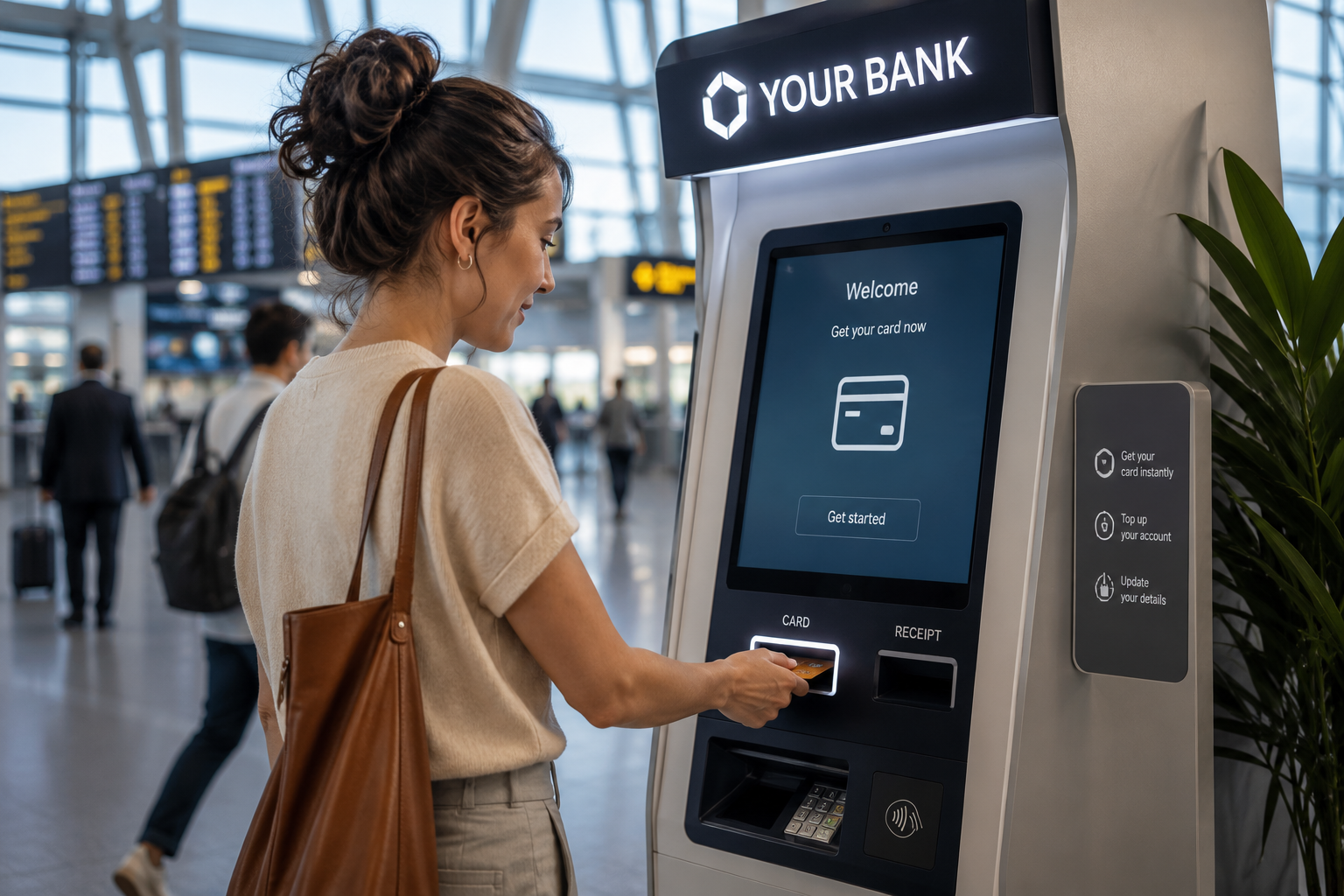
Modern banking is no longer a binary choice between an app and a brick-and-mortar building, but a spectrum of experiences designed to meet the customer wherever they are.
The institutions that understand this are already pulling ahead. Not by spending the most on technology, but by thinking most carefully about the moments that matter in a customer’s financial life — and making sure they are present, in the right form, for each of those moments.
The Customer Experience Lens
From a customer experience perspective, phygital banking is really just a good service design applied to financial services. It asks: what does the customer need at each moment in their journey, and what is the best way to deliver it?
Sometimes it’s an app notification at midnight. Sometimes it’s a card that arrives in a premium envelope and feels worth opening. Sometimes it’s a kiosk at the airport. Sometimes it’s a person behind a desk who looks up when you walk in.
The banks that win will not be the most digital, but the best at orchestrating digital and human channels. They will be the most thoughtful — about which channel, at which moment, for which customer.
That is a customer experience challenge, not a technology challenge — and it’s one every bank can begin addressing today.
Learn more about how Linistry can elevate the customer experience in the banking industry with its customer journey solutions.