
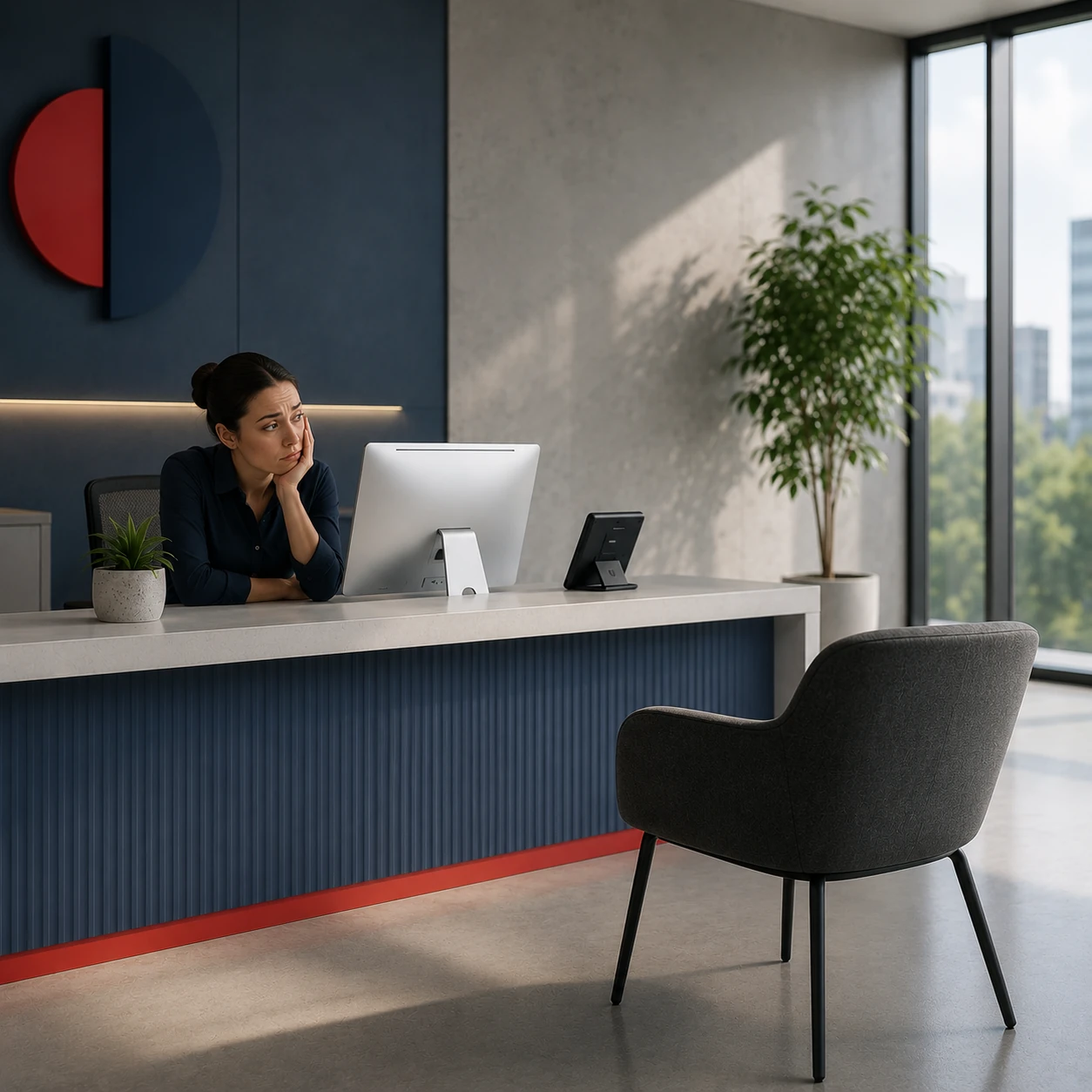

The fastest, best-documented way to cut no-shows is layered automated reminders — sent at booking, roughly 24 hours out, and again a couple of hours before — combined with a one-tap way to confirm or reschedule. On their own, SMS reminders reduce no-shows by up to 38%. Stack a second reminder on top and the reduction climbs past 50%, and multi-channel systems combining SMS, email, and voice reach 30–60%. Reminders alone aren’t the whole fix, though — booking design and cancellation policy matter almost as much, and the sections below cover both.
1. Send more than one reminder, and lead with SMS
A single reminder helps. Two, spaced apart, help more. One 24-hour-out reminder reduces no-shows by around 30%; adding a second reminder 1–2 hours before pushes the reduction past 50%. The channel matters too — SMS open rates run around 98%, versus roughly 20% for email, which is a large part of why text has become the default channel for time-sensitive confirmations.
A practical cadence that shows up repeatedly across industries: a reminder at booking, one 24 hours out asking for a reply to confirm or reschedule, and a short day-of nudge with logistics. Each step should let the customer act — reply YES, tap a link, pick a new slot — rather than just informing them and hoping they remember.
2. Make rescheduling as easy as booking
A lot of no-shows aren’t really “forgetting” — they’re a scheduling conflict the customer didn’t bother to resolve because fixing it meant a phone call during business hours. If the reminder includes a direct reschedule link, that friction disappears, and the customer who can’t make it Tuesday just picks Thursday instead of skipping entirely.
This connects to a pattern we’ve covered before: online-booked appointments show up at a 3.2x higher rate than phone-booked ones, largely because the same self-service ease that makes booking easy also makes fixing a booking easy. A system where “reschedule” is one tap protects the slot; a system where it’s a phone call during work hours loses it.
3. Get something from the customer before the appointment
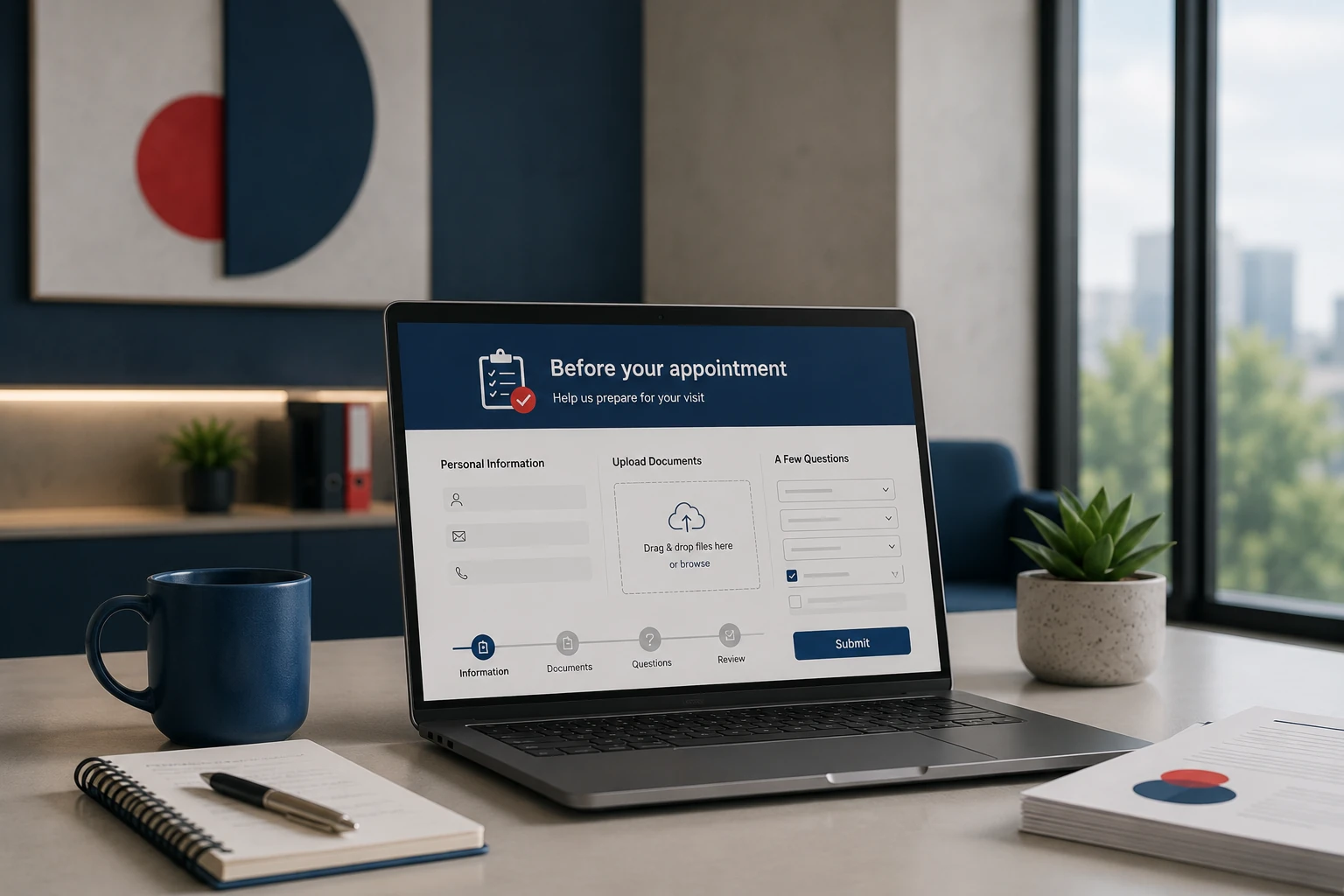
Digital pre-visit intake — a short form, a document upload, a few qualifying questions completed before the appointment — does two things: it speeds up the actual meeting, and it gets the customer psychologically invested in showing up. Combining reminders with pre-visit digital intake adds roughly another 18% reduction in no-shows on top of reminders alone, and practices running both together report 25–40% total reductions.
For consultative appointments — a mortgage consultation, an investment review, an insurance claim meeting — this step does double duty: it protects the slot and it means the advisor isn’t starting from zero when the customer does show up.
4. Set a clear cancellation policy, and say it once
A posted no-show or late-cancellation policy, even a modest one, changes behavior — not primarily through the fee itself, but through the signal that the slot has value. Typical no-show fees run $25–75, stated plainly at the point of booking rather than buried in terms and conditions. The tone matters here: reminder messages that lead with a fee threat tend to create friction before the appointment even happens, whereas a policy stated once, calmly, at booking tends to work better than repeated warnings.
5. Track the number, don’t just assume it’s fine
Most businesses don’t actually know their no-show rate — they know it “feels okay” or “feels bad.” It’s a simple calculation: (no-shows + late cancellations) ÷ total scheduled appointments, ideally broken down by day of week, appointment type, and how far in advance it was booked. That last variable tends to matter most — appointments booked weeks out carry meaningfully higher no-show risk than same-day bookings, since intent fades and calendars shift in the gap. Segmenting the data usually reveals that no-shows cluster around a specific type of appointment or booking window, which tells you exactly where to focus reminder intensity, rather than applying the same cadence everywhere.
6. For banks and other high-value appointments, the stakes are different
A missed haircut is a lost hour. A missed mortgage consultation or investment review is a lost advisor slot that was booked, prepared for, and often hard to refill on short notice. In banking specifically, the same principles apply but the design details shift:
- Confirmation should route through the same channel the customer booked on — mobile app, chatbot, or web — so the confirmation feels like part of one continuous journey, not a separate system bolted on.
- Pre-visit data capture matters more, not less. An advisor walking into a mortgage conversation with context already gathered has a stronger reason to protect that slot than one walking in cold.
- Rescheduling should route to the right advisor again, automatically, not dump the customer back into a general queue — otherwise “reschedule” quietly becomes “give up.”
FAQ
What’s the single most effective way to reduce no-shows?
Automated SMS reminders, sent at more than one interval, consistently show the strongest, best-documented effect — typically 30–38% reduction on their own, and 50%+ when paired with a second reminder closer to the appointment time.
Do reminder texts actually work, or do people just tune them out?
The data says they work. SMS open rates run around 98%, and most replies to a well-timed reminder arrive within minutes — far higher engagement than email or a missed phone call to voicemail.
Should I charge a no-show fee?
It’s optional, but a modest, clearly stated policy (commonly $25–75) tends to reduce repeat no-shows, mainly by signaling the slot has real value — not primarily through the revenue it recovers.
How far in advance should reminders be sent?
A three-touch cadence works well for most businesses: a confirmation at booking, a reminder around 24 hours before with an easy reschedule option, and a short day-of nudge with logistics.
Does online booking itself reduce no-shows, separate from reminders?
Yes — online-booked appointments show meaningfully higher attendance than phone-booked ones, largely because the same platform that makes booking easy also makes confirming and rescheduling easy, which keeps more customers engaged instead of silently dropping off.
 Linistry Appointment Booking: A Highly Customizable Booking System for Consultative, Sales-focused Meetings
 Linistry Appointment Booking: A Highly Customizable Booking System for Consultative, Sales-focused Meetings
Linistry provides an enterprise-grade appointment booking platform as a quickly deployable, out-of-the-box SaaS solution. It offers a tailored, omnichannel booking process for in-person and virtual meetings. Linistry Appointment Booking can be deeply integrated into your bespoke environment.