


A Practical, Data‑Driven Guide for Modern Service Providers
Customer waiting time is one of the strongest predictors of customer satisfaction, branch efficiency, and overall service performance. Long queues increase churn, reduce sales conversion, and damage brand perception. Fortunately, today’s service providers—from banks and telecoms to retail networks and public institutions—can drastically reduce waiting times using modern queue management, capacity planning, and customer‑journey orchestration.
This article explains how to reduce customer waiting times using proven operational strategies and modern digital tools.
Why Waiting Time Reduction Matters
Reducing customer waiting times is not only about speed—it’s about customer psychology, operational control, and data‑driven decision‑making.
Key impacts:
- Customer satisfaction increases when waits are predictable and transparent.
- Sales conversion improves when customers stay instead of abandoning queues.
- Operational efficiency rises when staff allocation matches real demand.
- Brand perception strengthens when customers feel respected and informed.
1. Implement a Modern Queue Management System (QMS)
„Modern queue management systems reduce waiting times by 20–40%.”
A modern QMS helps reduce waiting times by making service flows predictable and transparent. A well‑designed system typically includes:
- Virtual queuing
- Mobile updates
- Appointment scheduling
- Real‑time dashboards and
- Capacity planning
2. Introduce Virtual and Paperless Queuing
„Real‑time updates reduce perceived waiting time by 35%.”
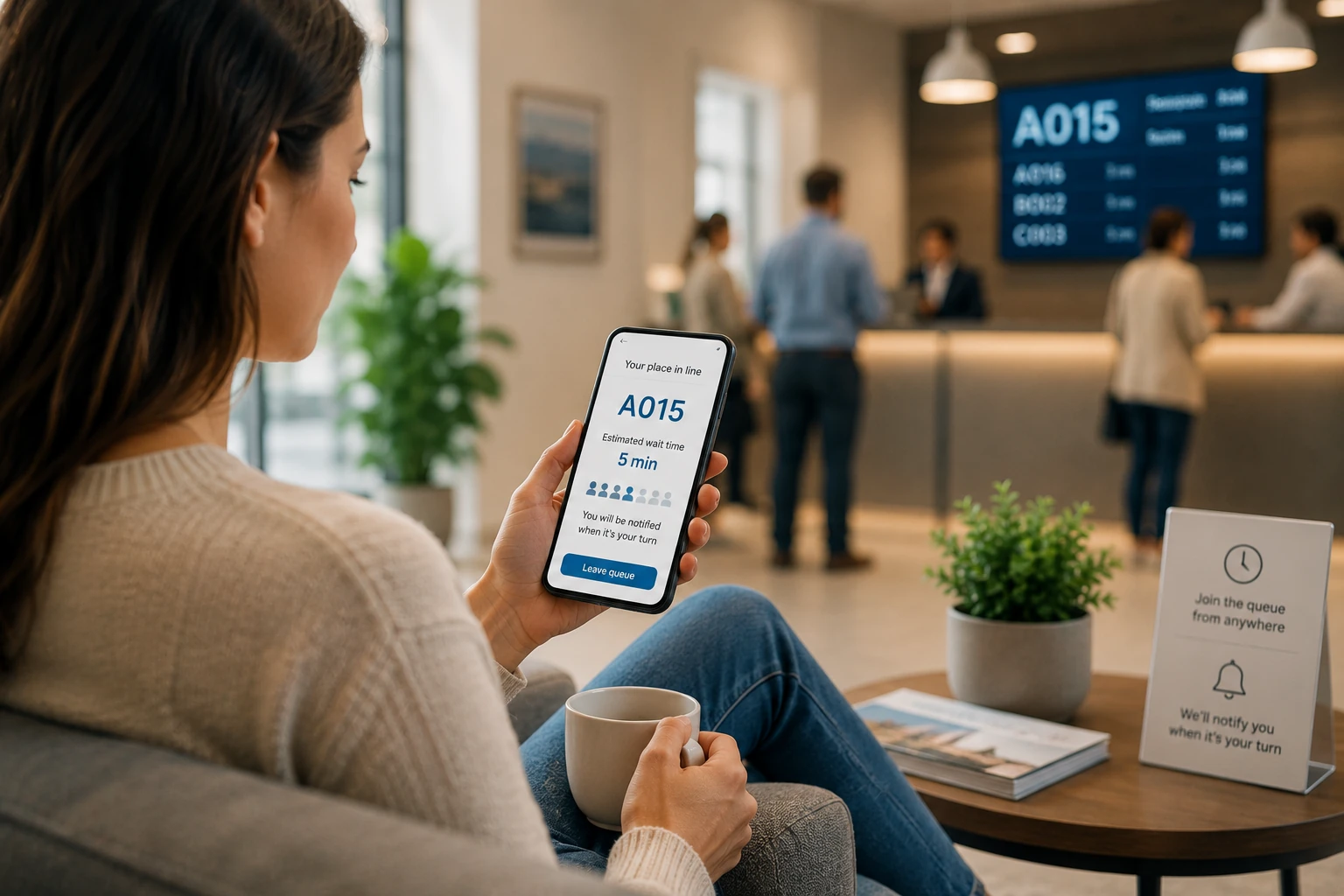
Virtual queuing significantly reduces both actual and perceived waiting time. Customers can join queues remotely, receive updates, and arrive only when their turn approaches.
Key benefits:
- Reduced physical congestion
- Lower walkaway rates
- Higher comfort and transparency
- More predictable service flow.
3. Use Appointment Scheduling to Pre‑Plan Demand
Walk‑in traffic is unpredictable. Appointment scheduling transforms chaos into planned capacity and helps:
- Stabilize daily demand
- Reduce waiting time
- Prepare staff for specific service needs
- Improve customer experience consistency
4. Leverage Real‑Time Data, Alerts, and Dashboards
“Perceived wait feels 36% longer without real‑time updates.”
Real‑time analytics enable:
- Early detection of queue escalation
- Dynamic staff reallocation
- Bottleneck identification
- Performance tracking and
- Proactive customer experience management.
5. Improve Staff Allocation and Competency Matching
“Optimized staff allocation can increase throughput by up to 30%.”
Even the best technology fails without proper staffing. Effective staff allocation includes:
- Competency‑based assignment
- Real‑time reallocation
- Weekly capacity planning and
- Dedicated welcome advisors.
6. Reduce Perceived Waiting Time Through Better Communication
“59% of customers are willing to wait longer if they receive progress updates.”
Perceived waiting time often matters more than actual waiting time. Clear communication reduces frustration and increases patience.
Techniques:
- Mobile notifications
- Digital signage
- Estimated wait time displays and
- Continuous queue progress updates.
7. Bridge Digital and Physical Customer Journeys
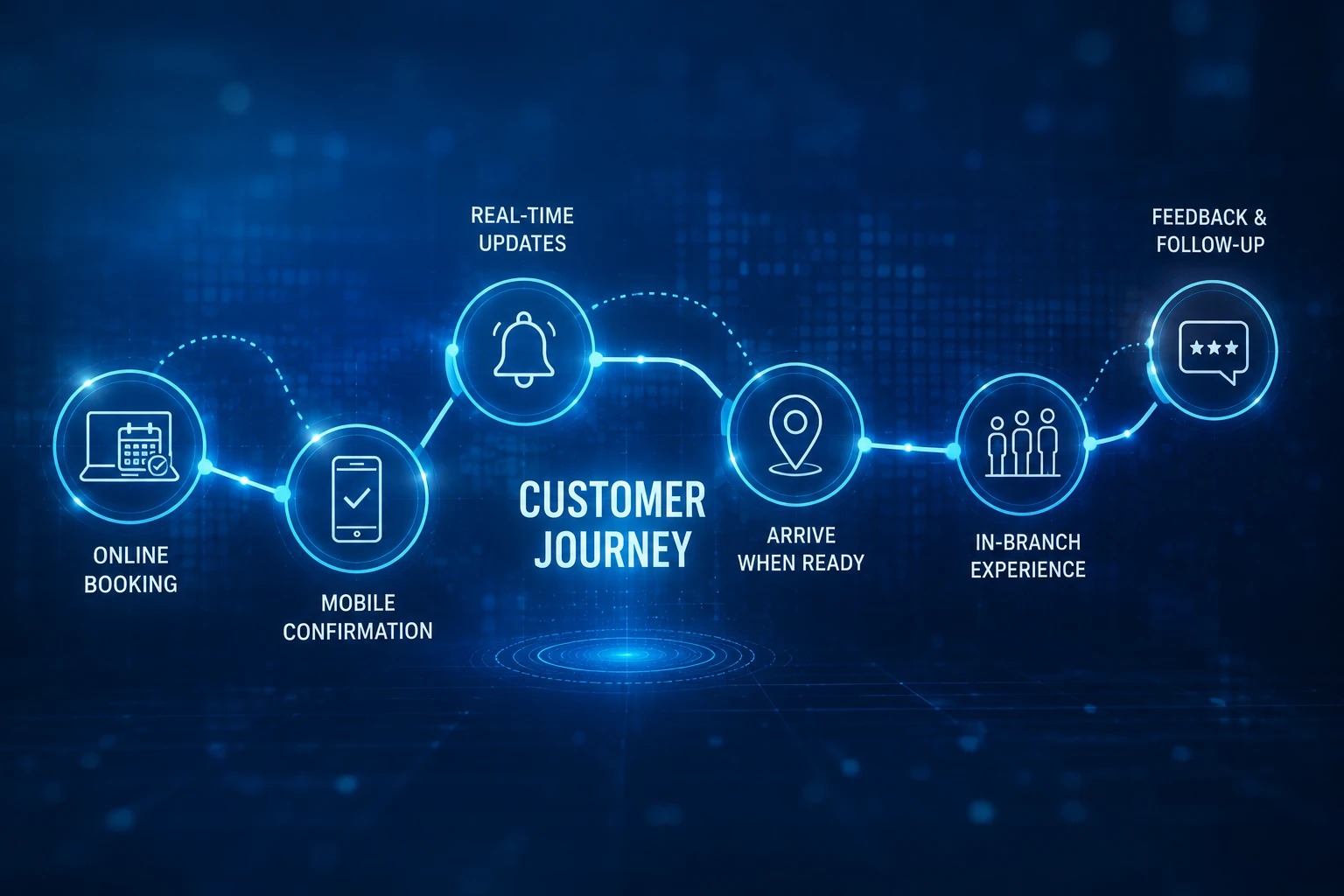
Omnichannel consistency increases customer satisfaction. Customers expect seamless transitions between online and offline channels:
- Online appointment → in‑branch check‑in
- Mobile queue token → service desk
- CRM integration → personalized service.
This reduces friction and improves service flow.
8. Use AI‑Assisted Forecasting and Visit Pattern Analysis
“AI‑based forecasting improves staffing accuracy by 25–35%.”
Understanding customer visit patterns is essential for reducing waiting times. Forecasting reveals:
- Peak hours
- Seasonal trends
- Service category load
- Required staffing levels
9. Continuously Measure and Improve Service Performance
“Customer satisfaction drops 8% per minute beyond expected wait time.”
Waiting time reduction is an ongoing process. Key metrics:
- Average waiting time
- Service time per category
- Customer churn
- Staff performance
- Customer feedback
Summary: How to Reduce Customer Waiting Times
| Strategy | Impact |
| Virtual queuing | Reduces physical waiting |
| Appointment scheduling | Stabilizes demand |
| Real‑time dashboards | Enables fast intervention |
| Capacity planning | Optimizes staffing |
| Digital signage | Reduces perceived wait |
| Omnichannel journey | Ensures consistent experience |
FAQ
How much can a Queue Management System reduce waiting times?
Industry studies show reductions in the 20–40% range depending on adoption level.
Does virtual queuing eliminate physical lines?
Yes. Customers join remotely and arrive only when their turn approaches.
Can queue management improve sales?
Yes. Reduced waiting times increase satisfaction, reduce walkaways, and improve conversion.
 Linistry Queue Management: Industry Innovation for Enhancing Customer Experience
 Linistry Queue Management: Industry Innovation for Enhancing Customer Experience
 Linistry provides an enterprise-grade queue management platform as a quickly deployable, out-of-the-box SaaS solution. It offers cost-efficient, paperless queueing and minimizes wait time by recommending less busy periods or alternatives like virtual queueing or appointment booking. Linistry Queue Management can be deeply integrated into your bespoke environment.