
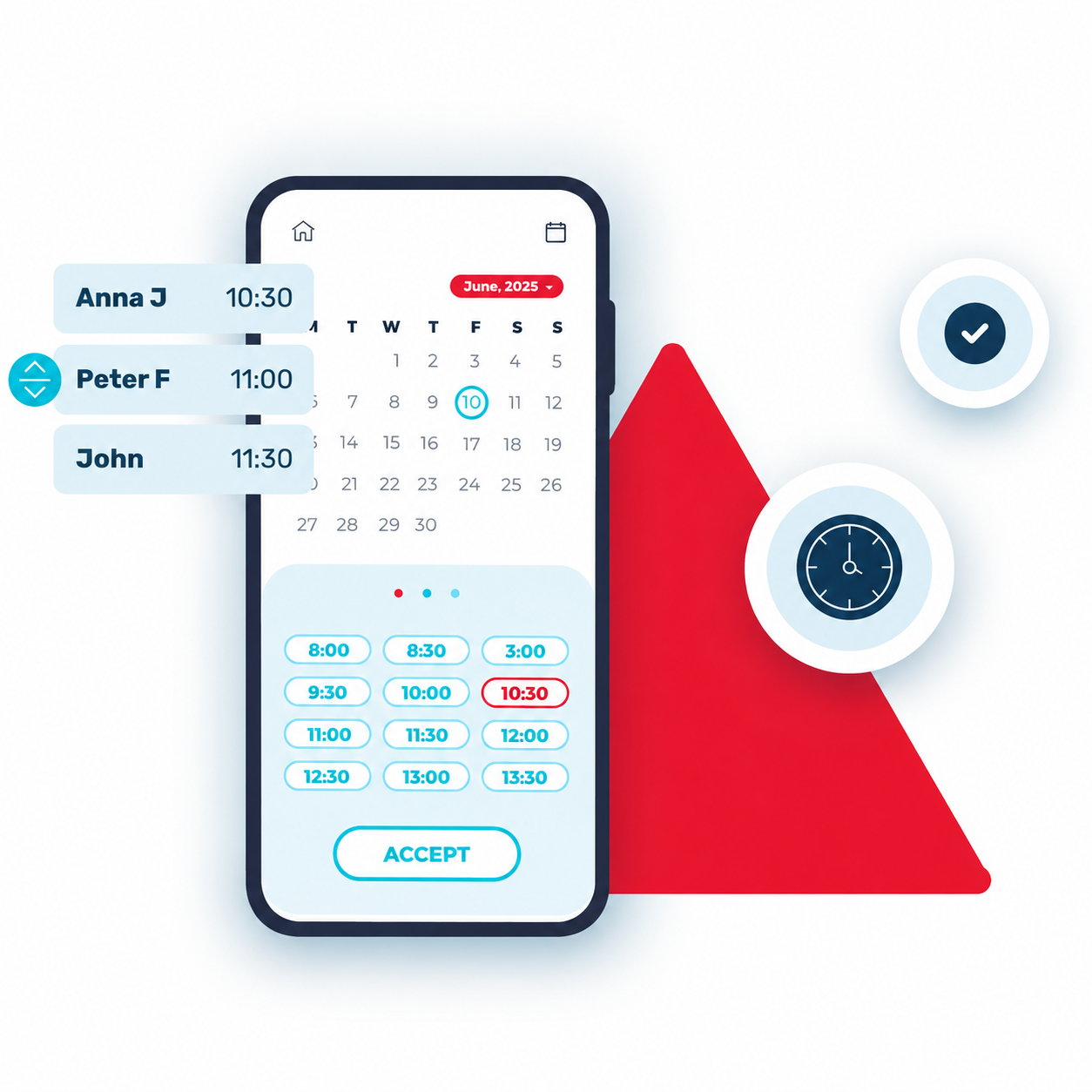

A customer walks into a branch for a mortgage consultation. The system that booked that appointment had no idea it needed to route them to a lending specialist, pull up their existing accounts, or flag that this is a 45-minute conversation, not a 10-minute one. That’s what happens when a bank runs its branch network on a scheduling tool built for salons and dental offices.
The real question isn’t which scheduler has the nicest interface. It’s which appointment booking software can support how a bank actually works.
Short answer: The best appointment booking software for banks is a customer journey platform, not a standalone scheduler. It routes each customer to the right specialist by product, branch and language, handles in-branch and video meetings in one booking flow, steers routine requests to digital channels, shares booking details with the advisor before the meeting, and runs on ISO 27001-certified, bank-grade infrastructure. Linistry is one example: a CEE bank with 200 branches raised the share of customers booking appointments from 5% to 30% after replacing its in-house system with Linistry Appointment Booking.
What Makes Banking Appointment Booking Different From a Generic Scheduler?
A tire service or a hair salon books one type of appointment, with one type of outcome. A bank branch handles a dozen in a single day: a mortgage review, a small business account opening, a wealth consultation, a card dispute. Each needs a different specialist, a different amount of time, and often a different set of systems to open before the customer sits down. Add regulation, plus the expectation that phone, video and branch contact feel like one relationship, and a salon-grade scheduler doesn’t cut it.
The branch itself isn’t going anywhere. Accenture’s 2026 banking research shows customers still favor branches for complex needs, even with well over a hundred mobile touchpoints a year. McKinsey’s Global Banking Annual Review 2025 adds that while mobile is now the most widely used channel, branches remain critical in many markets for tasks such as opening a current account.
The category has also matured. Dataintelo’s market estimate puts enterprise-grade appointment scheduling at 67% of tier-one global banks by early 2026, up from 38% in 2021. The differentiation now lies in what a platform does beyond booking a slot.
What Should the Best Appointment Booking Software for Banks Include?
1. One Platform, Not a Patchwork of Point Tools
Many banks stitch together a booking widget, a queue tool, an analytics system and a notification tool. Each works on its own, but nobody owns the full customer journey.
Customers feel the seams. Salesforce’s connected customer research found that 79% of customers expect consistent interactions across departments, yet 55% say it feels like dealing with separate departments. Running an appointment booking system and a queue management platform on one architecture fixes that at the root. MBH Bank replaced systems inherited from several vendors with Linistry’s unified queue management and appointment scheduling platform across nearly 400 branches, and cut customer waiting times by 30%.
2. Deep Integration Into the Bank’s Existing Stack
As Research.com’s enterprise scheduling software guide points out, scheduling software has to connect with the systems a bank already runs (CRM, core banking, communication suites) or it creates more IT overhead than it saves. For a bank, that might mean Microsoft 365, Microsoft Entra ID, the CRM and back-end systems that hold the customer relationship, plus two-way calendar sync, so advisors are never double-booked.
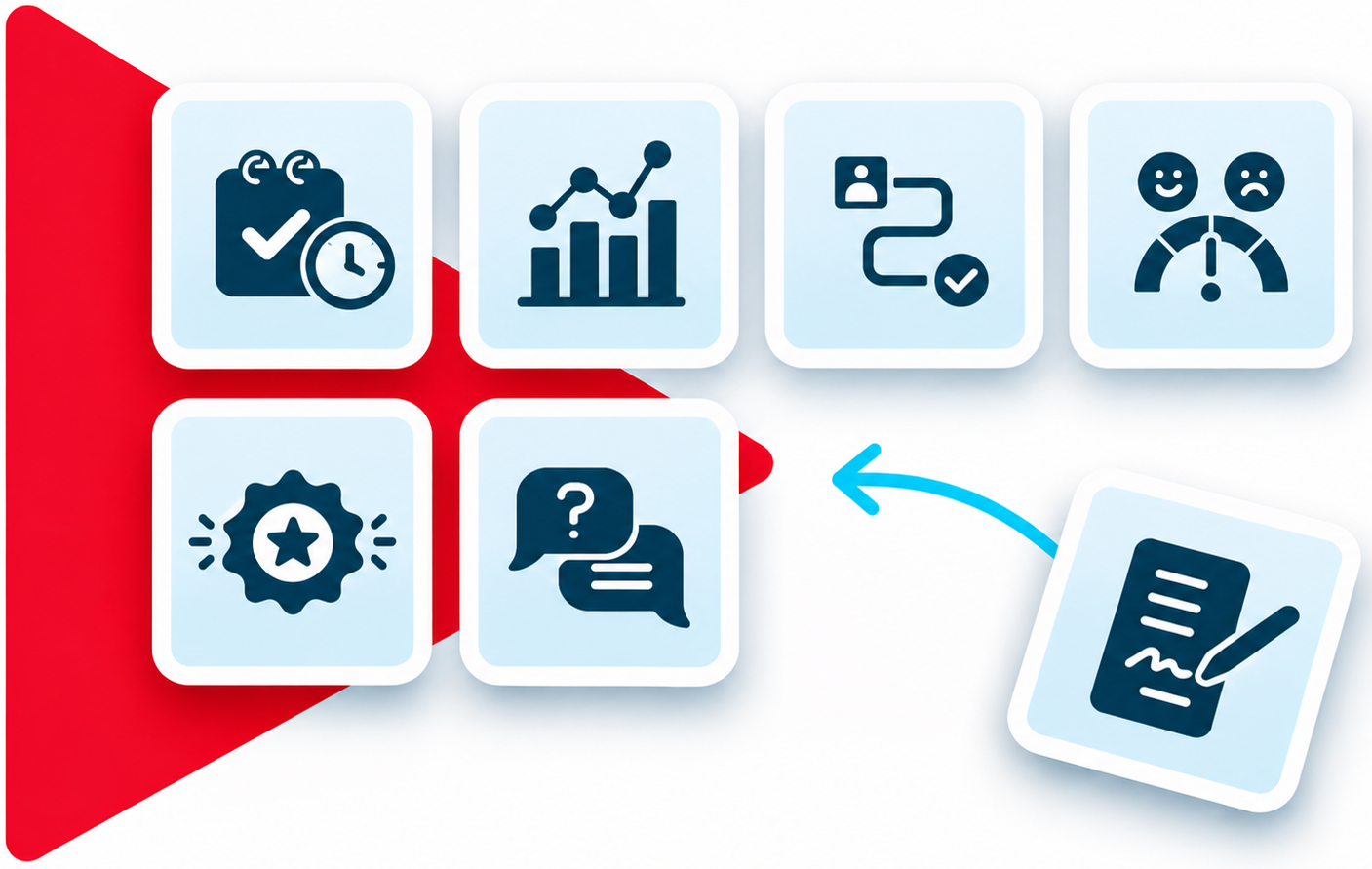
3. Enterprise-Grade Security Without Enterprise-Grade Bloat
This one isn’t negotiable. Look for ISO 27001 certification, real-time visibility into how customer data moves, and auditable access control.
EU banks have one more layer. Since January 2025, the Digital Operational Resilience Act (DORA) have set uniform rules for how financial entities secure their network and information systems and recover from ICT disruptions, which puts your booking vendor inside the resilience picture. (Linistry runs as ISO 27001-certified, penetration-tested SaaS on Microsoft Azure.)
4. Routing That Keeps Branch Time for High-Value Meetings
Advisor time is the scarcest resource in the network. The booking flow should match each customer to the right specialist by product, branch and language, pass what they entered during booking to the advisor’s dashboard and point routine requests to the app or online banking. A CEE bank with 200 branches raised its appointment booking share from 5% to 30% after moving to Linistry Appointment Booking, using planned meetings to steer transactional customers out of the branch and open up cross-selling opportunities.
5. A Partner With Consultative Expertise, Not Just a Vendor
A booking widget can be configured by anyone with an afternoon and a login. A bank’s real appointment logic can’t. A vendor ships software and moves to the next deal. A partner stays close after go-live, understands that a Hungarian retail bank and a German universal bank don’t run identical processes, and configures the platform around the reality on the ground. UniCredit Bank Hungary extended its pilot to six months at its own request, then rolled out Linistry’s appointment booking and queue management to all its Hungarian branches ahead of schedule, without drawing on internal IT resources. At Banca Transilvania, the verdict was simple: „Linistry has contributed significantly to the overall customer experience at Banca Transilvania.“
6. AI-Powered Capacity Planning That Keeps Improving
The scheduling layer shouldn’t run on rules set once at go-live. When AI-driven capacity planning is part of the platform’s core, it learns from real booking and branch traffic patterns, flags bottlenecks and surpluses across the network, and shows which booking sources convert into sales. It gets sharper every quarter instead of needing a re-implementation every few years.
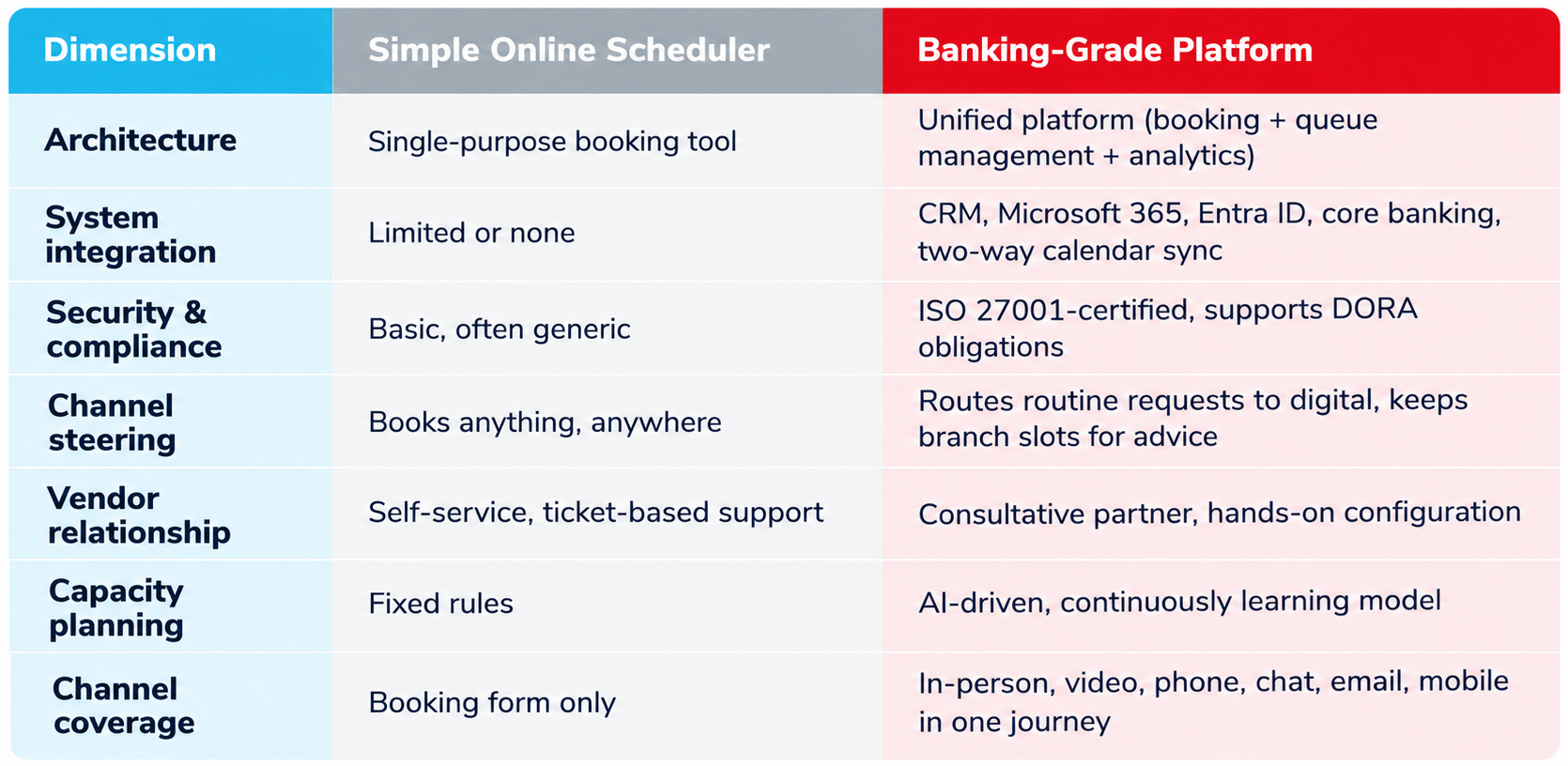
Simple Scheduler vs. Banking-Grade Appointment Platform
The Bottom Line
Choosing the best appointment booking software for a bank isn’t really a scheduling decision. It’s an infrastructure and partnership decision. The platform has to survive real integration, security and operational demands, and the vendor has to bring more than a ticket queue.
In the end it comes down to total cost of ownership (TCO), integration depth and the long-term partnership model, not the booking interface. Platforms such as Linistry, used by MBH Bank, UniCredit Bank Hungary and Banca Transilvania, show what that looks like across a real branch network.
If your bank has outgrown a basic scheduler, or you’re evaluating platforms for the first time, take a look at what Linistry’s banking solutions cover: not just the booking layer, but the full customer journey around it.
Frequently Asked Questions
What is appointment booking software for banks?
Appointment booking software for banks lets customers schedule in-branch or video meetings with the right specialist online, by phone or in the app. Unlike a generic scheduler, it routes bookings by product, branch and language, shares customer context with the advisor, integrates with the bank’s CRM and identity systems, and meets banking security requirements.
Is a generic online scheduler enough for a bank branch network?
For a single-location business with one appointment type, sure. For a branch network, it falls short fast: no specialist routing, no compliance-aware data handling, no integration with the CRM or core systems that hold the customer relationship. Multi-branch banks often outgrow generic tools quickly.
What security certifications should banking appointment software have?
ISO 27001 is the baseline, since it signals an established information security management system rather than ad hoc controls. EU banks should also check how the vendor supports their DORA obligations.
How much does the right appointment booking platform actually save a bank?
The clearest measurable win is usually fewer no-shows. Systematic reviews summarised in a PLOS One trial report found that SMS and phone reminders significantly reduce missed appointments, and every no-show avoided frees advisor time that’s already paid for. Beyond that, gains come from lower IT overhead and fewer escalations, because customers reach the right specialist for the first time.