
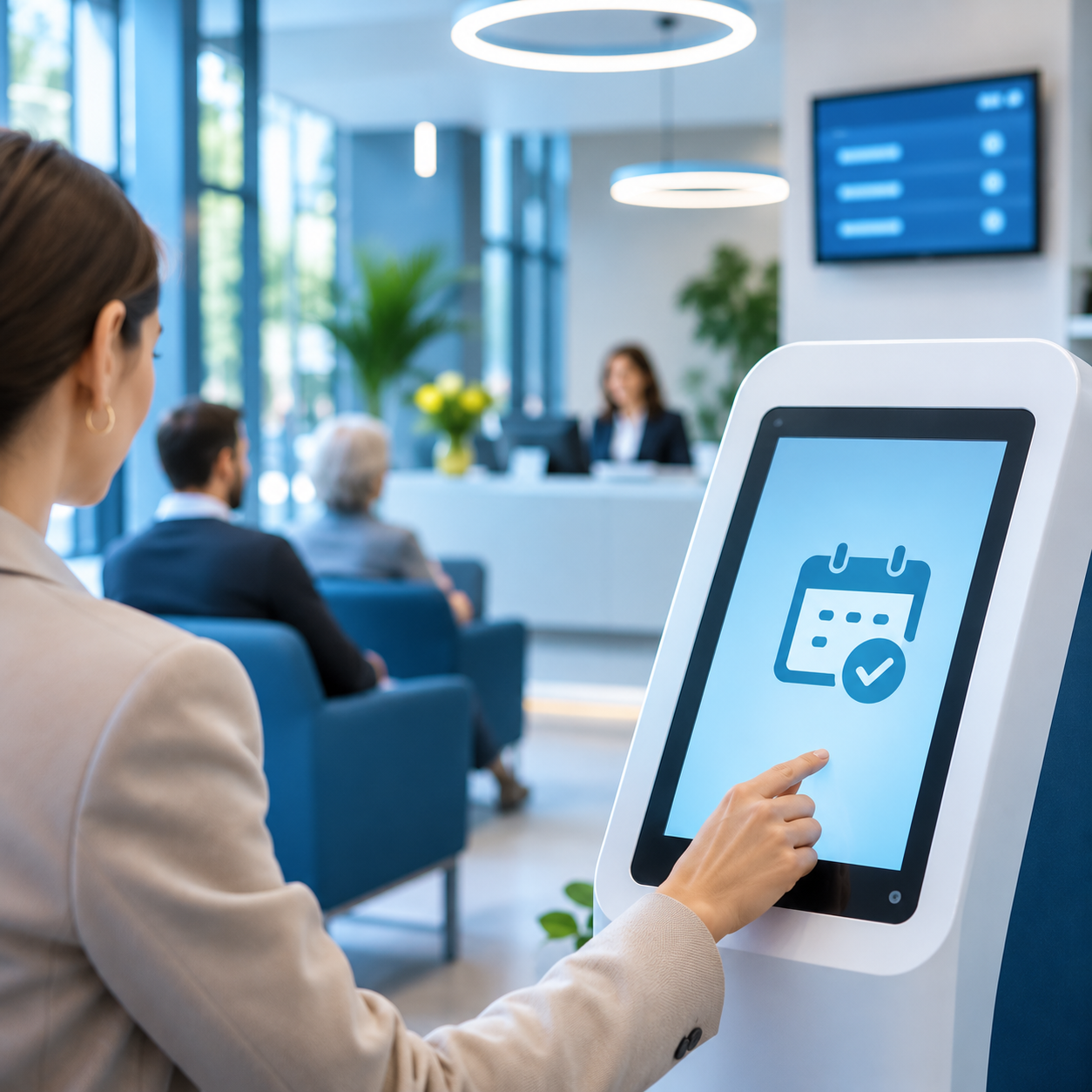

Most queue management projects don’t fail in the demo. They fail six months later, when the system that looked great in a meeting room meets a Monday morning in a busy branch. Choosing the right queue management software is challenging. In G2 Digital Markets‘ State of Software Buying in 2026, a survey of 3,385 decision makers, only one in three buyers adopted new software without disruption or regret, and 61% had faced implementation disruption in the previous 18 months.
Short answer: Start with your service model, not the feature list. Map how customers arrive, pick the KPIs you want to improve, then shortlist about three vendors that combine virtual queuing, appointment booking, real-time dashboards and integration with your CRM and identity systems. Pilot in a few locations before a full rollout. Taking the above considerations into account, MBH Bank, for example, replaced several vendors‘ queue systems with the Linistry platform across nearly 400 locations and cut customer waiting times by 30%.
What problem are you actually solving?
Describe how customers arrive and what they need once they’re inside. A bank branch, a retail store and a government office can all say „we have queues“ and mean very different things.
| Business type | Typical queue problem | Capability to prioritize |
| Bank branch network | Routine transactions crowd out advisory meetings | Appointment booking and channel steering alongside walk-in queuing |
| Retail store | Customers wait at service desks or can’t find an associate | Virtual queuing plus a staff mobile app for help requests |
| Public sector office | Peaks around deadlines, strict security and accessibility rules | Online booking, priority handling, accessible white-label interfaces |
| Telecom shop | A mix of sales, repairs and contract changes | Service-based routing and CRM integration |
| Multi-site network | Different systems and data in every location | One platform with central reporting |
Retail adds its own twist. In a 2026 IBM–NRF study of more than 18,000 consumers, a visually appealing store with no waiting topped the list of desired shopping experiences. If that’s your world, a queue that lets people keep browsing is worth more than a faster ticket printer.
Before you talk to any vendor, write down the two or three KPIs you want to move. Average wait, walk-away rate and the share of booked visits are good candidates.
Which features are must-haves, and which can wait?
The basics are table stakes. The real differences sit one layer up. G2’s queue management category only includes products that let customers join a digital queue, collect visitor information, send status notifications and report on efficiency. Treat that as the floor.
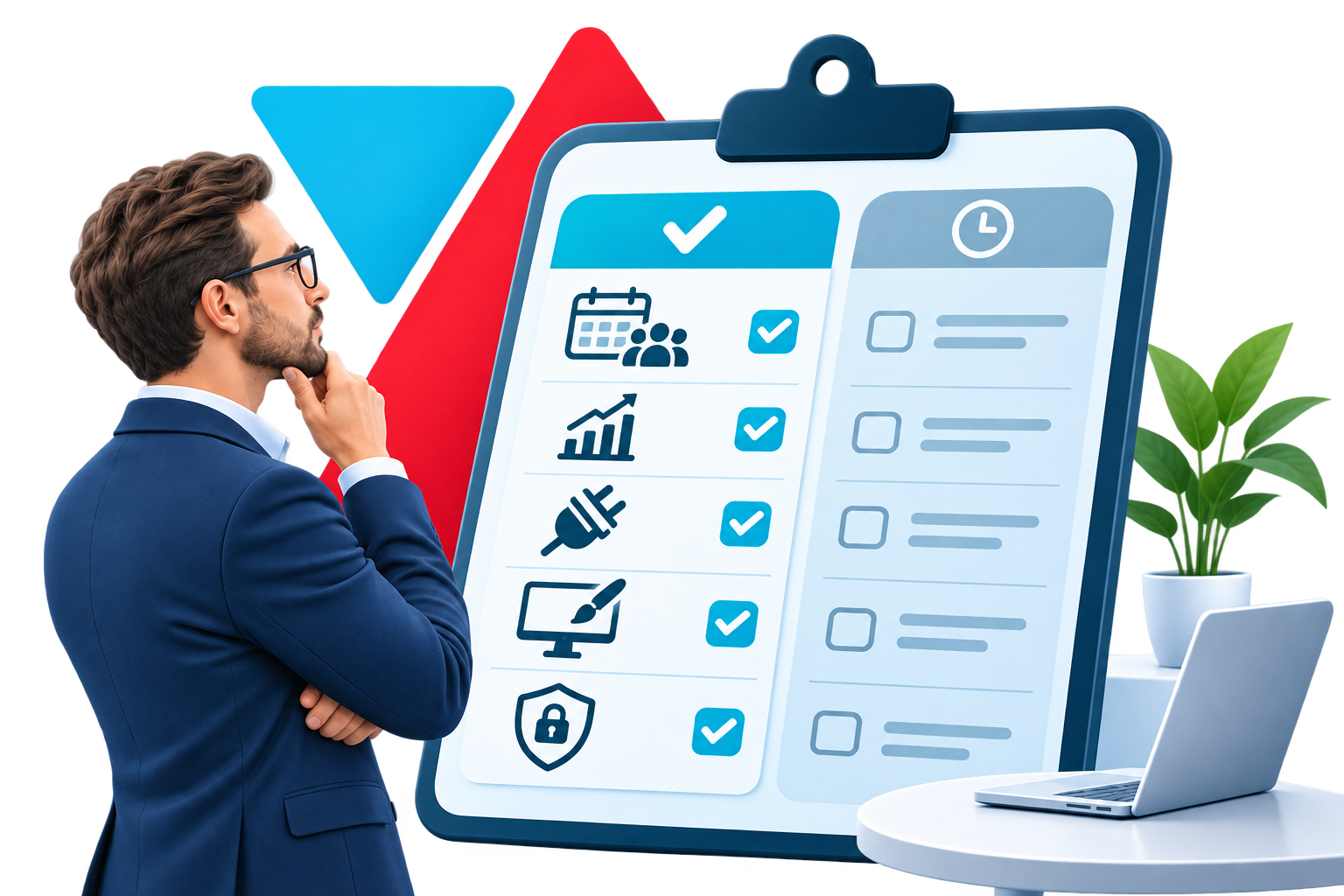
Above it, a short list separates platforms that hold up across a whole network:
- Queue management and appointment booking on one platform, so walk-ins and booked visits share one schedule and one dataset
- Capacity planning based on your visit history, with machine learning built into the scheduling engine rather than bolted on as a separate analytics tool
- Integration with your CRM, Microsoft 365 and identity provider
- Fully white-labelled screens, so customers see your brand at every step
- Certified security, such as ISO/IEC 27001, which sets the requirements for an information security management system.
For a feature-by-feature walkthrough, see our queue management system selection criteria.
Should you build, buy, or replace what you have?
Buy, in most cases, unless queuing is your core business. Building looks cheaper until the first outage on a busy day.
A Top 30 European banking group member bank learned this the hard way. Its self-built booking tool, maintained by the website team, broke down over the 2021 Christmas holidays and stayed down until the new year. The bank moved to Linistry, which it had piloted in 2020, and the share of booked visits grew from 5% to 30%.
Replacing an existing system is a different decision, usually driven by functional limitations and customizability. MBH Bank ran queue systems from several vendors, each with different features and patchy data. It consolidated nearly 400 locations onto one cloud platform for queue management and appointment scheduling, and customer waiting times fell by 30%. „My personal favorite is the real-time dashboard, which provides immediate, well-visualized information, about branch locations, intervention points, and the current traffic load.“ says Judit Pichler, a manager in MBH Bank’s retail branch network management.
How do you run a selection process you won’t regret?
Keep it short and evidence-based. In the G2 Digital Markets research, buyers who adopted successfully usually engage with three vendors and decide within about three months. A workable sequence:
- Map your service model and KPIs, as described above.
- Shortlist about three vendors that cover your must-haves.
- Send security and IT questions early. Certificates, hosting, single sign-on and data retention. Your CISO can stop a project late, so give them the documents first.
- Pilot in a few representative locations, including at least one busy one.
- Compare total cost of ownership over several years: licences, hardware, integration, support and your own team’s operating effort.
- Call a reference customer in your industry and ask what went wrong during rollout.
How fast should you expect results?
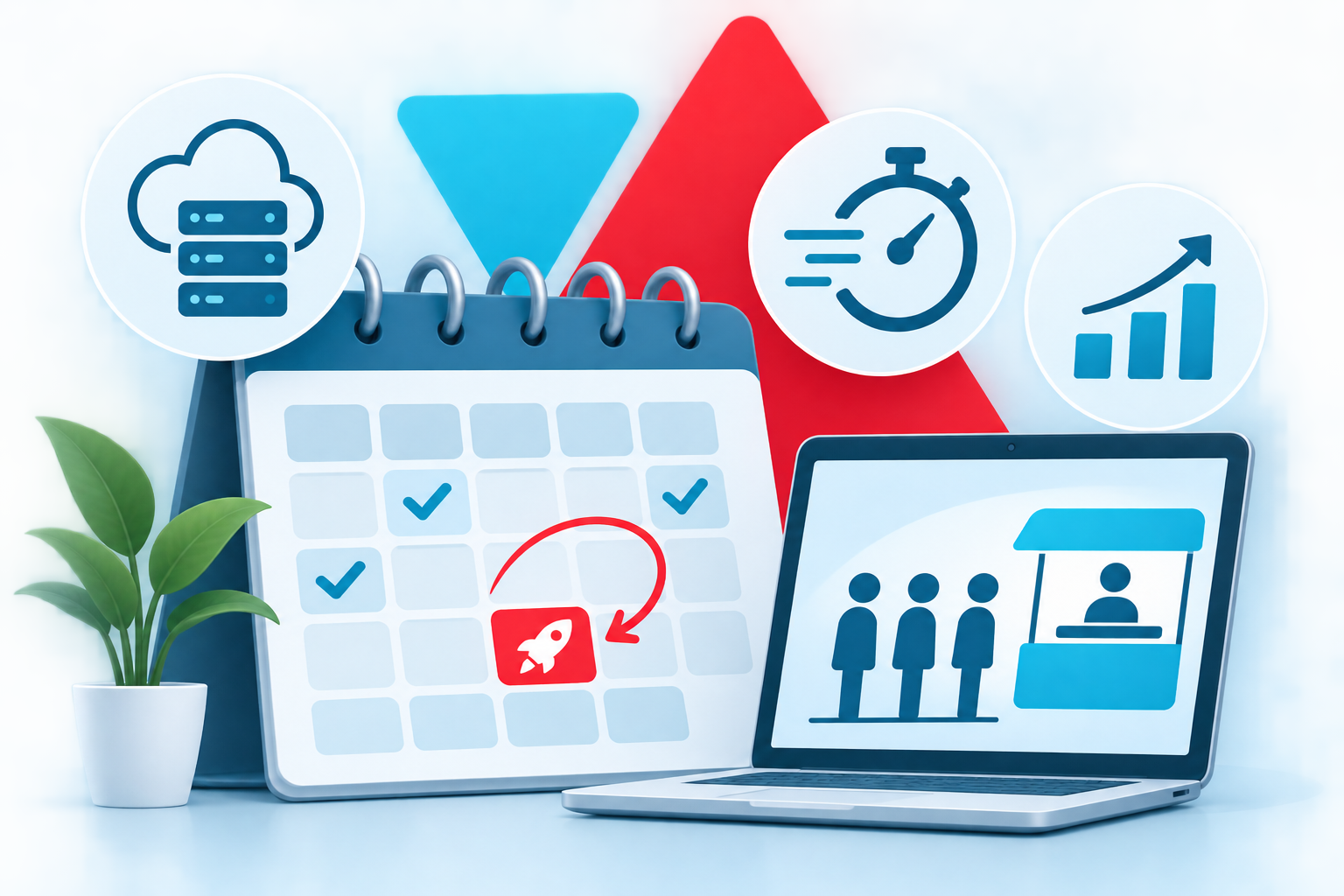
With a cloud platform, think weeks to a few months. MediaMarkt rolled out Linistry’s queue management system in about two months, then saved customers 3 million minutes of waiting and reached a Net Promoter Score above 90%.
Speed after launch matters too. Services change, campaigns start, regulations shift. At MBH Bank, a new service went live in the queue interface within two business days of the request. Ask every vendor on your shortlist how long a change like that takes them.
The bottom line
The right queue management software fits how your customers actually arrive and survives your security review. Get there by defining the problem first, keeping the shortlist small, piloting before you commit and asking hard questions about change speed after launch.
Linistry, a queue management and appointment booking platform for banks, retailers, telecom operators and public bodies, runs these journeys for organizations including MBH Bank, MediaMarkt, mömax and UniCredit. Its aim is to turn in-person service from a cost center into a growth engine. If you’re starting a selection, a free consultation will help you map your service model before the first vendor demo.
Frequently asked questions
What is queue management software?
Queue management software organizes how customers wait for service at a physical location. It issues digital or virtual tickets, routes customers to the right service and staff member, shows wait times and reports on service performance. Many platforms also include appointment booking.
How much does queue management software cost?
Cost depends on the number of locations and service points, the modules you need and how deeply the system integrates with yours. Most enterprise platforms are sold as cloud subscriptions, which removes the need for on-site servers. A free consultation based on your own network is the quickest route to a realistic figure.
How long does it take to implement queue management software?
A cloud platform typically goes live in a few weeks to a few months, depending on integrations and the number of sites. MediaMarkt’s rollout took about two months.
Should you choose cloud or on-premise queue management software?
For most organizations, cloud. It takes server maintenance and upgrades off your team and delivers new features to every location at once. On-premise can still make sense where internal policy rules out external hosting, so check each vendor’s certificates and hosting before you decide.