


Why Retail Leaders Must Stop Treating Experience as a Cost Center
Retail has always been price sensitive — and in uncertain economic times, even more so. But the latest data challenges one of the industry’s most persistent assumptions: price alone does not create loyalty. It may win the first transaction, but it rarely wins the second.
According to the Qualtrics 2026 Consumer Experience Trends Report, value for money remains the #1 driver of purchase decisions, yet long‑term loyalty is shaped by something far more complex: the overall customer experience in retail — the blend of product quality, service quality, and how customers feel across the journey.
This distinction matters now more than ever. Retailers who compete only on price are entering a race they cannot win.
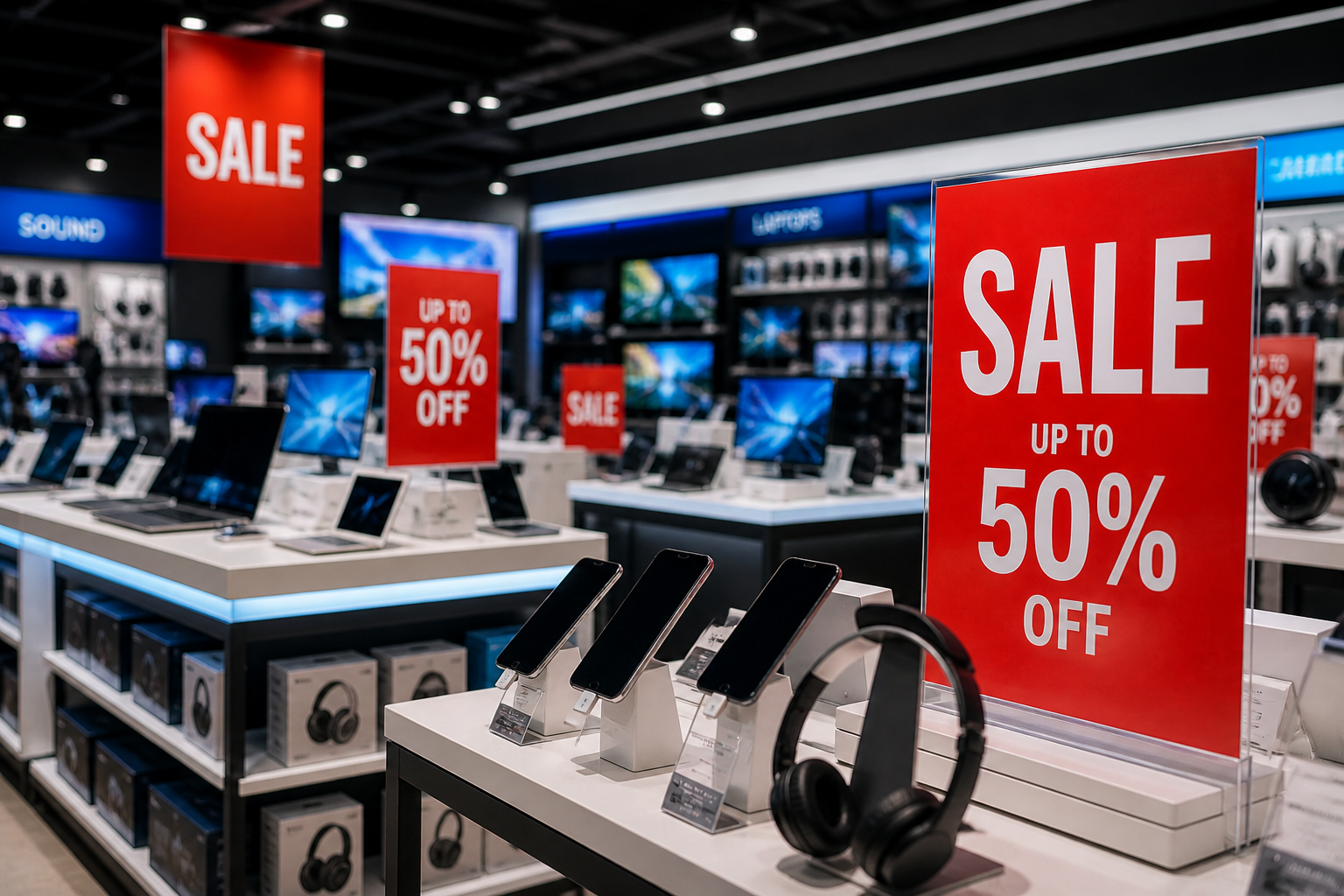
The Retail Trap: Competing on Price
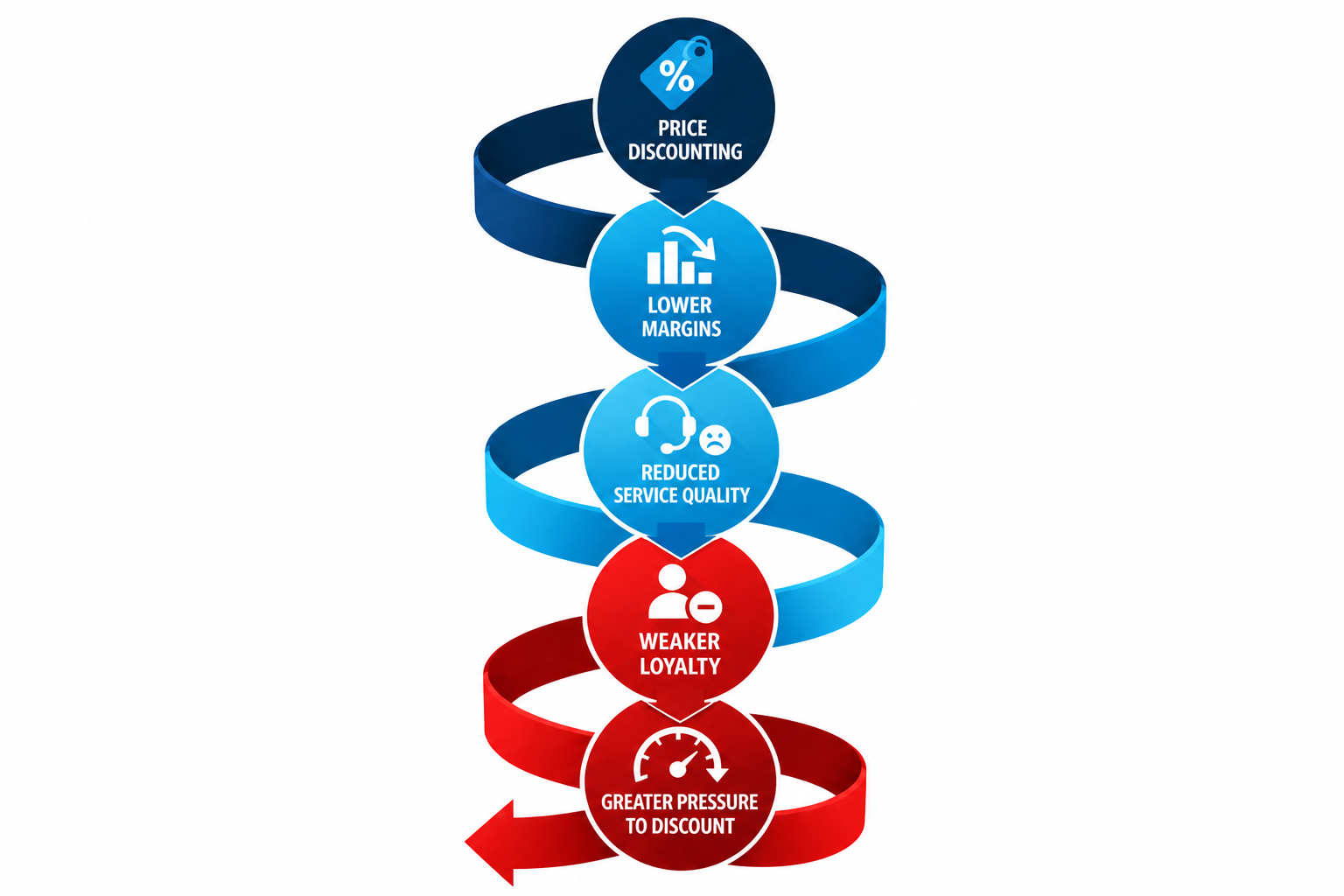
Discounting works — but only temporarily. It creates a predictable downward spiral:
- lower prices → lower margins
- lower margins → reduced service quality
- reduced quality → weaker loyalty
Over time, retailers unintentionally train customers to chase deals instead of building relationships. And once customers become deal‑driven, it’s extremely difficult — and expensive — to reverse their behavior. Price is the easiest lever to pull, but also the easiest for competitors to copy. Customer experience, however, is much harder to replicate. When retailers rely too heavily on promotions:
- customers become less responsive to regular prices,
- store teams shift from service to throughput,
- brand differentiation erodes and
- loyalty becomes purely transactional.
This is why even strong brands see declining repeat visits when service quality slips. Customers may forgive a higher price — but they rarely forgive a poor experience.
The Downward Spiral of Price-Driven Retail
The Hidden Cost of Poor Customer Experience in Retail
When experience breaks down, customers rarely complain. They simply visit your store less often, switch channels, reduce basket size and/or move to competitors. Silence is not satisfaction — it’s disengagement. And retailers who rely only on surveys miss most of these signals.
Behavioral data — wait times, dwell times, service flow, abandonment patterns — reveals the truth long before feedback does.
Real‑World Example: When Price Cuts Backfire
A large European electronics retailer learned this the hard way. Facing declining footfall, the company launched an aggressive discount strategy: weekly promotions, deep price cuts on accessories, and constant “limited‑time” offers. For the first three months, the numbers looked promising — traffic increased, baskets grew and competitors reacted slowly.
But underneath the surface, something else was happening. Customers began timing their visits around promotions. Regular‑price sales dropped sharply. Store teams, overwhelmed by volume, shifted from service to throughput. Wait times increased, product explanations became shorter, and issue resolution slowed.
By the end of the year:
- margins had eroded,
- customer satisfaction scores had fallen,
- and repeat visits were down despite higher traffic.
When the retailer paused the discounts to recover margin, customers simply moved to competitors offering similar deals. The brand had unintentionally trained its own customers to be loyal to price — not to the retailer.
It took two intensive and costly years of investment in service quality, staff tools, and store experience to rebuild the loyalty that had been lost in six months of discount‑driven strategy.
What Actually Builds Loyalty
The data is clear: customers stay when they feel:
- confident in product quality,
- supported when something goes wrong and
- consistently well‑served across channels.
These elements build trust, repeat purchases, and resistance to competitors.
Loyalty is not created by a single moment — it is accumulated through consistent, predictable experiences. Customers return to retailers who reduce friction, resolve issues quickly, make them feel valued and deliver the same quality every time, on every channel.
In a world where every product has a substitute, experience becomes the only defensible moat. So, instead of focusing solely on pricing strategies, leading retailers are shifting investment toward:
- Store experience optimization (wait times, service flow, queue management, appointment booking)
- Staff empowerment (better tools, better context, real‑time service insights)
- Consistent omnichannel journeys (no disconnect between online and in‑store experience)
Experience investments deliver measurable business impact:
- higher conversion rates,
- larger basket sizes,
- reduced walkouts,
- more efficient store operations and
- greater customer lifetime value.
The Bottom Line
Customers may come for the price, but they stay for the experience. Customer experience in retail is not a cost center — it is an ROI engine, a key differentiator and the only sustainable competitive advantage.
Source: Qualtrics XM Institute, 2026 Consumer Experience Trends Report
The Retail Store of the Future – Free E-Book
Explore how real-time data, AI, and immersive digital tools are transforming traditional retail into a dynamic, customer-centric journey. Gain insights into the benefits of personal in-store consultation and innovative retail solutions that will shape the future of retail shopping. Download our free e-book today