

The Future Role of Bank Branches: From Transaction Hubs to Trust Anchors
For more than a decade, the dominant narrative around bank branches has been declining. Digital channels, mobile apps and self-service solutions have steadily absorbed transactional volumes, raising recurring questions about whether physical branches still have a role at all. The Banking 2026 study from Accenture suggests a different conclusion: branches are not disappearing but being fundamentally redefined. Meet the future of banking from this post.
Branches as Trust Infrastructure in an AI-First World
As AI-driven and agentic experiences become mainstream, banking interactions increasingly move into automated and often invisible layers. Customers will rely on AI assistants and agents to make decisions and even execute transactions on their behalf. In this context, physical branches take on a renewed strategic role: they represent tangible trust, safety and accountability in a world where digital interactions can be opaque or difficult to verify.
The branch therefore evolves from a place of routine service into a visible point of assurance behind digital and agentic banking journeys.
From High Volume to High Value
The research shows that while customers increasingly prefer digital channels for everyday tasks, they still favor branches for complex, high-stakes activities such as financial advice, dispute resolution and major life decisions. This points to a clear specialization of the physical channel:
- Fewer visits, but longer and more meaningful ones
- A shift from transactions to consultation
- A stronger focus on trust-based interactions
In the future of banking, branches are becoming advisory and decision centers rather than transactional service points.

New Formats: Smaller, Smarter, More Flexible
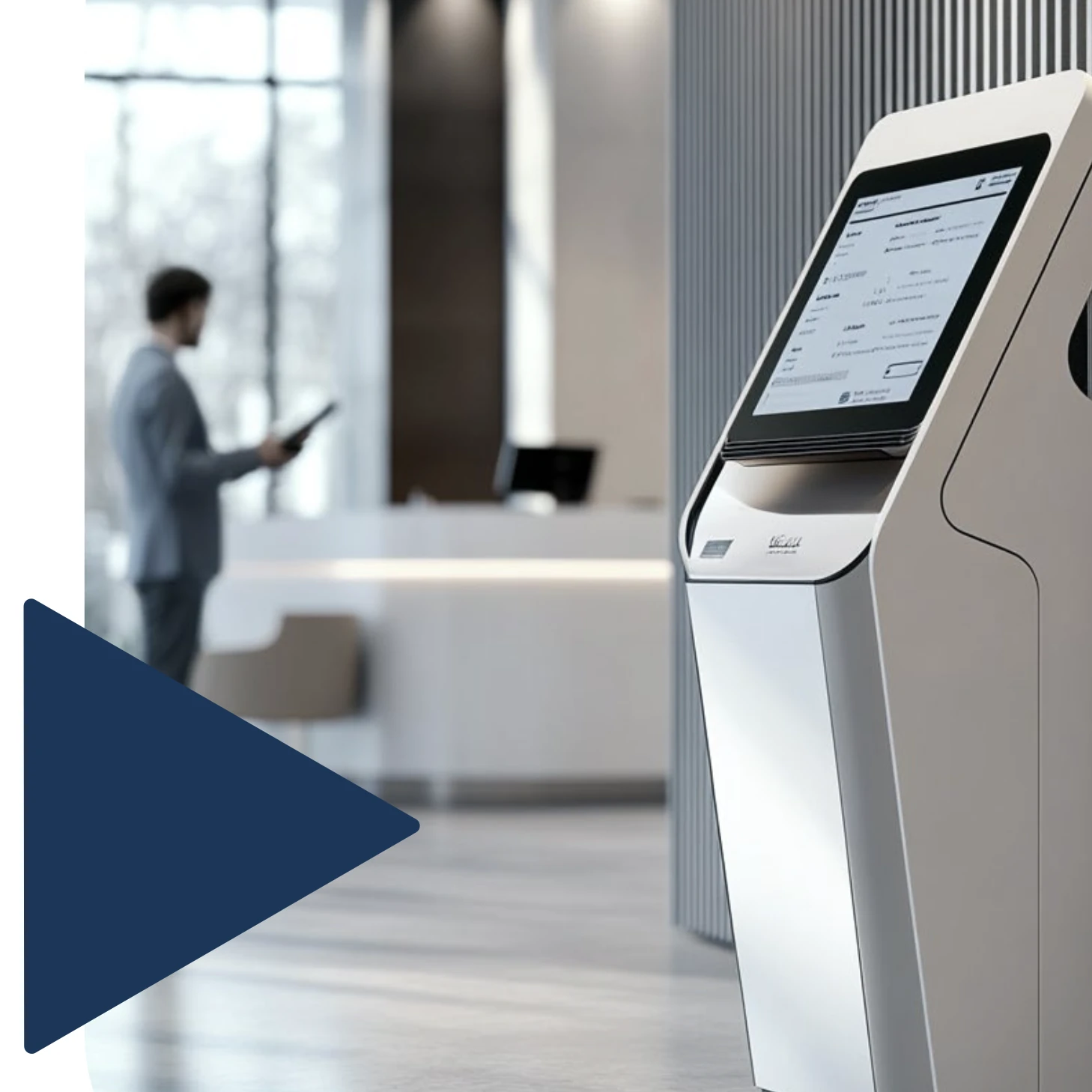
Rather than maintaining large, transaction-heavy locations, banks are experimenting with new formats such as micro-branches, smart booths and pop-up locations. These formats are designed to appear where customer intent already exists — high-traffic urban areas, retail environments or temporary events.
This trend reflects a move toward demand-driven physical presence, supported by appointment-based and intent-aware interactions that reduce waiting times and improve experience efficiency.
Orchestrating Digital and Physical Journeys
A defining characteristic of the future of banking is the branches’ integration into a broader, continuous customer journey. Customers increasingly expect their context, intent and history to follow them seamlessly across digital and physical touchpoints. The study highlights the importance of preserving continuity of conversation across channels to meet these expectations.
In practice, this means:
- Branch visits often continue a journey that started digitally
- Advisors need full visibility into customer intent and prior interactions
- Repetition, fragmentation and waiting become unacceptable
The branch becomes one node in an orchestrated experience, not a standalone endpoint.

Conclusion: Fewer Branches, Greater Impact
The future branch will not compete with digital banking on speed or convenience. Instead, it will complement AI-driven experiences by providing certainty, human judgment and accountability at critical moments. Banks that succeed will treat branches not as legacy cost centers, but as strategic assets embedded in an end-to-end customer journey.
In the future of banking, branches will be used less frequently — but when they are used, they will matter more than ever.
Redesigning TRUST – The role of bank branches in the digital age – Free Ebook

Explore how digital tools, AI, and human insight together create a next-generation branch experience. Learn how banks can deliver faster service, reduce uncertainty, and build deeper customer relationships. Download our free ebook today.